The Familiar-Name Trap: Choosing Beyond the Composer
Choosing a concert by composer alone can mislead; compare the forces, format, duration and setting to find a performance that suits your evening.
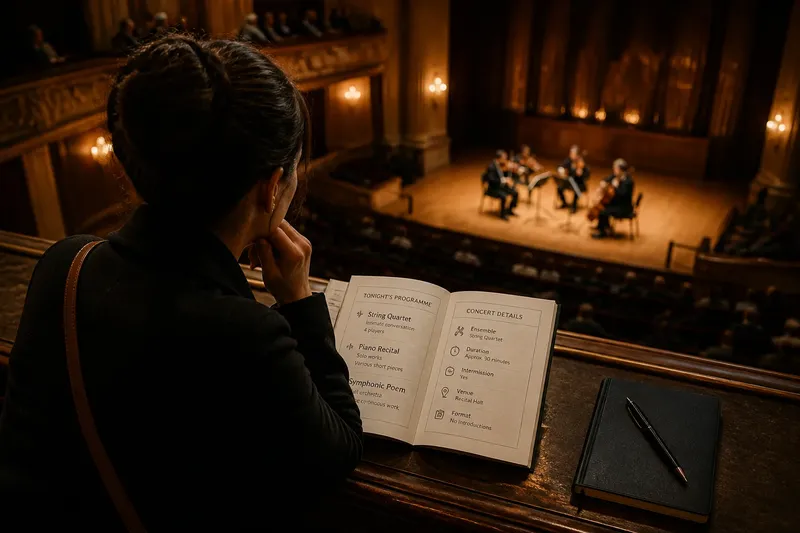
You recognize the composer on a concert listing, but the rest of the description is unfamiliar. Choosing a concert by composer alone can leave you unsure whether the evening will feel intimate, expansive, demanding or easy to follow. A familiar name is a useful clue, not a reliable forecast: the performers, the works, the format and the venue all shape what you will hear.
Instead of trying to predict whether you will like a composer, compare the kind of listening experience each concert offers. A string quartet, a large orchestra and a solo recital can present music by the same composer in dramatically different ways. The right choice depends on what you want to pay attention to and how much uncertainty you are comfortable with.
Compare the sound each concert puts in the room
Start with the forces listed in the program. “Forces” means the people and instruments performing: a solo pianist, a chamber ensemble, a choir, an orchestra, or some combination. This detail often gives a more direct sense of a concert’s character than the composer’s name does.
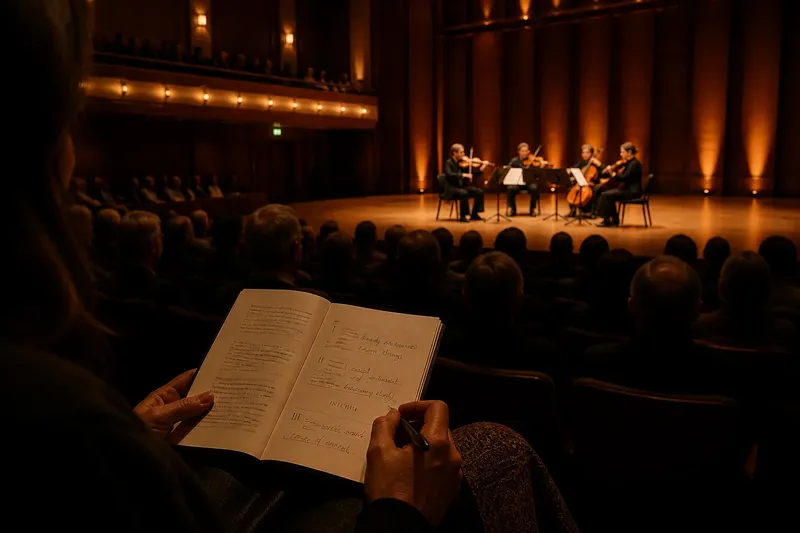
A chamber group puts a small number of players in close conversation. You may hear a melody pass from violin to cello or notice how the players respond to one another. An orchestra can build a denser, broader sound, with several instrument families contributing at once. A solo recital focuses attention on one performer’s interpretation and on the changing character of a single instrument.
None of these formats is automatically more approachable. A quartet may be quiet and intricate; an orchestra may offer clear contrasts between solo passages and full ensemble. Look for descriptions of the instruments and ensemble, then consider which sound you would enjoy following for an evening.
Choose between a familiar work and a familiar artist
Concert listings offer two different kinds of recognition. You might know a composer but not the specific piece, or know the soloist or ensemble without recognizing any of the music. Those are not interchangeable forms of reassurance.
A named work can give you a concrete point of reference. If you already know a symphony, concerto or song cycle, you have some idea of its scale, mood or musical shape, even if the live performance differs from a recording. A performer’s name tells you who will interpret the music, but less about the sound and structure of the pieces on the program.
On the other hand, a performer can be the most meaningful starting point if you enjoy their playing or want to hear how they approach different music. Read the full program before deciding. A familiar artist may be performing unfamiliar works, while a well-known composer’s name may cover pieces with very different instrumentation and pacing.
Look at format, pacing and the size of the occasion
The same composer can appear in a short recital, a concert built around one large work, or an evening of contrasting pieces. These formats ask for different kinds of attention. A recital may move through several shorter works; a concert centered on a long composition may invite you to follow a broader arc without interruption.
Check whether the listing names an intermission, spoken introductions, a host, projected text or another feature that changes how the performance unfolds. These details do not tell you whether you will like the music, but they can help you decide whether the format suits your attention and expectations.
Imagine you recognize a composer from recordings but have only a short window to concentrate after a busy day. One listing offers a solo recital of several short pieces; another centers on a substantial orchestral work. If you would rather reset your attention between pieces, the recital may suit you better. If you like settling into one continuous musical argument, the orchestral program may be the stronger fit.
Check the concert details that change your decision
Before choosing, scan the listing for concrete clues beyond names. This checklist is useful when two performances seem equally appealing:
- Ensemble and instruments: Is this a solo performance, a small group, a choir, an orchestra or a mixed lineup? Use the answer to choose the sound you want to hear.
- Specific works: Are titles provided, or only composers? A named piece gives you a clearer basis for deciding than a composer credit alone.
- Program shape: Does the event feature several shorter works or center on one extended piece? Choose according to the kind of pacing you prefer.
- Performers and roles: Is a soloist, conductor or ensemble featured? Decide whether you are choosing for the performer’s work, the music, or both.
- Performance format: Does the description mention introductions, narration, singing, unusual staging or audience participation? Check whether those elements appeal to you.
- Duration and intermission: Are the expected running time and break information available? Use them to decide whether the evening fits the time and attention you have.
- Venue and seating arrangement: Is the performance in a concert hall, a smaller room or an unconventional space? Consider whether that setting matches the kind of listening you want.
If the listing leaves out a detail that matters to you, consult the venue’s event page or contact its box office. When duration, intermission or access information is unclear, ask rather than inferring it from the composer or ensemble.
Choose between these three ways of picking a concert
There is no need to use the same approach every time. Pick the route that fits what you know and what you want from this particular evening.
Choose a known work when you want a clear starting point
This suits listeners who enjoy returning to music they already recognize or who want a concrete basis for comparing interpretations. Confirm that the specific work is on the program: a composer’s name by itself does not tell you which pieces will be played.
Choose a performer when interpretation is your main interest
This works well if you follow a particular soloist, group or conductor and are happy to encounter unfamiliar music. Read the work titles as well as the performer names so you know what the artist will actually be performing.
Choose the format when you want to discover something new
This suits listeners who do not have a strong preference for a composer or performer but do know what kind of night they want: intimate, orchestral, vocal, short or built around one extended work. Filter for those details first, then use the composer and performer names as a final point of interest.
How do you choose when you know none of the pieces?
Begin with the instruments, ensemble and performance format. If the listing includes short descriptions of the works, use them to check for qualities you want to hear, such as a small ensemble or a program of contrasting pieces.
Does a famous composer mean the music will be easy to follow?
No. Recognition tells you that the composer is familiar, not how a particular piece is structured or how it will sound in performance. The work title, ensemble and format offer more specific clues.
Should you choose a concert because you like the soloist?
That can be a good reason if you are interested in the soloist’s interpretation. Check the program as well, because liking a performer does not tell you whether the music, length or format suits your plans.
What if the listing gives only a composer and a performer?
Look for the full event page, which may include titles, duration and performance details. If the missing information affects your choice, ask the venue instead of treating the names as a complete description.
Make the choice with the details you care about most
Decide what would make this concert satisfying before comparing listings. You might want the sound of a full orchestra, a close-up chamber performance, music you already know, or a performer whose interpretation interests you. Choose one or two priorities, then use the program details to see which event actually matches them.
For choosing a concert, the familiar composer is a starting clue rather than a verdict. Check the works, performers, forces, format and practical details; then pick the listing that gives you the kind of listening experience you want. If two options still seem close, choose the one whose details make you more curious about what you will hear.