A Midweek Concert with Room to Unwind
Plan a midweek concert with room to unwind by giving the performance a comfortable place in your evening, with fewer rushed transitions and a calmer return.
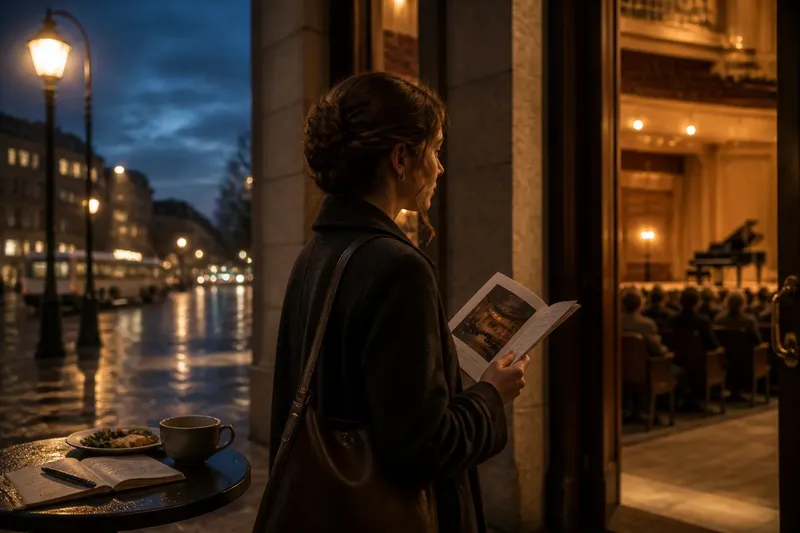
How do you fit a midweek concert into an evening without turning it into a race? Plan the night around the performance, not around errands, reservations, and extra stops. A midweek concert with room to unwind can still include a meal and a pleasant journey; the difference is choosing a pace that leaves breathing room before and after the music.
Imagine Lena, an invented concertgoer with a ticket for a Wednesday evening performance. She works across town, has a morning commitment the next day, and wants dinner as well as music. Her starting point is a calendar crowded with a late meeting, a restaurant booking near the hall, and a plan to meet a friend afterward. Rather than trying to squeeze everything in, she reshapes the evening so the concert is its main event.
Start with the parts of the evening that cannot move
Lena begins with the performance time and the venue’s published guidance on when doors open and when entry closes, if applicable. She checks the ticket and venue information rather than assuming that every hall follows the same schedule. Then she looks at the meeting, commute, dinner, and next morning to see which commitments can move or disappear.
This is not a request to schedule every minute. It is a way to identify the fixed points before adding anything else. A work meeting may have a firm end, while dinner can be earlier, simpler, or skipped in favor of a snack. A post-concert drink may sound appealing when planning at home but feel like an obligation after a full workday.
Lena decides to decline the late meeting, tell her friend she will meet them at the venue rather than across town, and leave the after-concert plan open. That gives her a clear priority without requiring a perfect evening.
Write down the performance time, the latest sensible departure from work, and the first commitment the next day.
Choose a pace that fits the trip to the venue
For a weeknight, the journey deserves more attention than a string of optional stops. Lena checks her route from work to the concert hall and considers what would happen if a train connection were missed or traffic slowed. She does not need to predict every delay; she needs a route with a reasonable alternative and enough slack to avoid treating a small disruption as a crisis.
She compares two workable options: going directly from work, or stopping at home first. The direct route means carrying a work bag, so she checks whether the venue provides a cloakroom and whether its hours and conditions suit her. Going home would let her change and put away her things, but it also adds another journey. She chooses the direct route and packs a small bag the night before, keeping only what she needs.
That decision is personal. A short stop at home can make an evening calmer if it is genuinely on the way; it can add strain if it creates another tight connection. Check transit service, parking arrangements, walking routes, and venue access information for your own trip. If your plans depend on a particular entry or bag policy, confirm the venue’s current instructions once before leaving.
Keep one simple fallback in mind, such as a later train or a nearby place to wait, instead of building a packed backup itinerary.
Make dinner support the concert rather than compete with it
Lena likes eating before a performance, but her original restaurant booking would leave little room for an unexpected delay. She replaces it with an early, casual meal near her workplace. She picks somewhere where she can order promptly and finish without watching the clock, then allows time to travel to the hall.
There is no single right meal plan. A person who prefers a full dinner might eat earlier, while someone with a long commute could bring a snack and eat after the performance. The useful question is whether the plan makes you hurry, feel overly full, or worry about arriving late. If it does, simplify it.
Lena also chooses not to make a second reservation for after the concert. She and her friend can decide afterward whether they want tea nearby or would rather head home. Leaving that choice open matters: an optional pleasure should not become another appointment to keep.
Use the time before the music to settle in
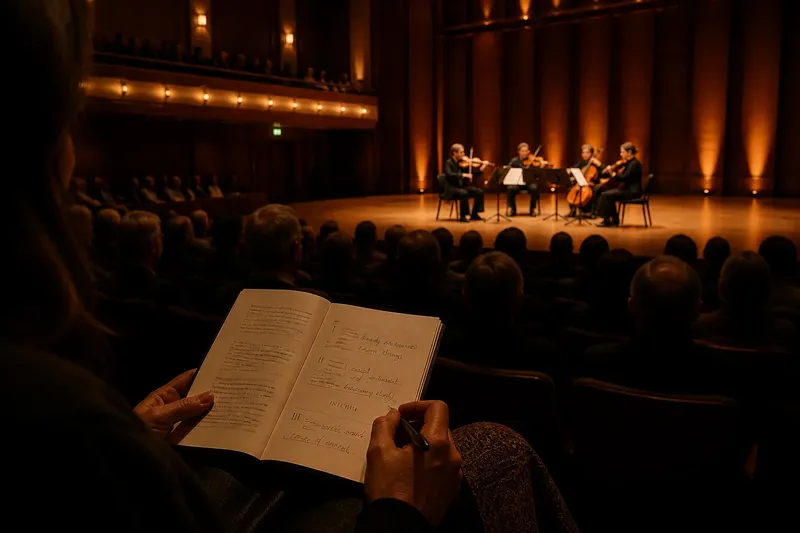
Once Lena reaches the hall, she wants the minutes before the performance to feel spacious, not like another task list. She knows the seat location from her ticket, so she can find the entrance and seating area without searching on her phone at the last moment. She gives herself time to use the restroom, silence her phone, and read the programme at her own pace.
She does not feel obliged to read every note. She checks the order of the works and scans for any practical details that help her follow the evening. If a passage catches her attention, she reads it; if not, she puts the programme away and lets the room become quiet. The goal is not to arrive with complete knowledge but to be ready to listen.
If you are meeting someone, agree on a clear meeting point and a time that does not depend on finding each other in a crowded entrance. Keep the arrangement simple enough that either person can proceed to the seat if plans shift.
Let the return home be part of the plan
Before the concert, Lena checks how she will get home and when the last convenient service runs. She saves the route information and tells her friend she may leave promptly afterward. This avoids a late scramble and makes it easier to enjoy the performance without wondering whether she has missed her ride.
She also makes a small adjustment for the next morning: work clothes and breakfast are ready before she leaves. That is not a reason to turn the evening into a productivity project. It simply removes a decision from the time when she is likely to be tired. She does not add household chores or an ambitious late-night catch-up session.
For another listener, the calmer choice might be a taxi, a lift with a friend, or staying near the venue. Choose the return option that suits your circumstances, and keep enough flexibility for the performance to finish later than expected.
What should you decide before a weeknight concert?
How early should I arrive?
Use the venue’s entry information and your own route to choose a departure that allows a comfortable arrival. Add time for the parts you actually need, such as collecting a ticket or finding your seat, rather than arriving so early that waiting becomes tiring.
Should I eat before or after the performance?
Eat beforehand if you can do so without rushing, or choose a simple snack and plan a meal afterward if that better fits your commute. Let your appetite, schedule, and travel options decide; a restaurant reservation is not essential to make the evening feel complete.
What if I am tired after work?
Reduce the number of decisions and commitments around the concert. A direct route, a light meal, and permission to go straight home afterward can make attendance feel manageable without asking you to act more energetic than you are.
Should I make plans after the concert?
Only if the plan sounds enjoyable even when the performance ends late or you feel ready to leave. Otherwise, keep the rest of the evening open and decide once you are outside the hall.
Notice what made the evening feel unhurried
Lena’s Wednesday does not become leisurely because she adds a special activity. It feels calmer because she removes the late meeting, avoids a cross-town dinner reservation, and has a workable way home. She meets her friend at the hall, enjoys the performance, and decides afterward that she would rather head home than find another place to sit.
Her result is not a formula for every concert. Someone with a shorter commute may prefer a meal near the venue; someone else may value a quiet pause at home. The useful lesson is to notice which transitions create pressure and give those transitions more room, while letting optional plans remain optional.
For your next midweek concert, choose one thing to leave out before adding anything new. That small edit can give the music more space in the evening—and leave you with a return home that still feels like part of a good night.